

What is your home worth? That’s a very tricky question. If you’ve lived in your home for many years and it holds good memories or you’ve invested a lot of sweat equity, it may seem priceless to you. In fact, many people tend to overestimate the value of their home based on their emotional attachment.
However, the actual price a buyer is willing to pay for your home is the “fair market value (FMV),” which, let’s be honest, sometimes may not seem all that fair! The FMV is typically based on what similar homes in your area are selling for and what type of competition is occurring in your local real estate market. Market value can be affected by the economy, supply and demand, and bidding wars. But ultimately, the market value is determined by the agreed purchase price between the home buyer and the seller.
And then there is the “assessed value,” which is used to calculate property taxes. This value isn’t used in the buying or lending process and won’t impact the purchase price.
Finally, there is the “appraisal value,” which is an expert’s official estimate of a property’s worth, used by lenders. It’s based on a physical inspection of the property and is required by lenders during a mortgage or refinancing process to protect their investment. In other words, they do not want to lend more money than what they feel the home is worth. Appraised values are also used when applying for a home equity line of credit.
Market value and appraisal value can often be very different. For instance, in a hot seller’s market, market value is typically higher than the appraised value. While in a slow market, the appraised value might be higher than what buyers are willing to pay. However, both values can impact your home purchase, so it’s helpful to know the difference and how it’s determined.
How is Appraisal Value Calculated?
To determine the appraisal value of your home, a licensed appraiser, who is hired by the lender assesses a home based on objective data such as recent sales of similar homes (comps), square footage, the home’s age, the location, and the condition of the home and the property, including renovations and remodels. Lenders are more interested in the appraised value, which helps them determine how much of a loan to provide. Here is a quick summary of the differences:
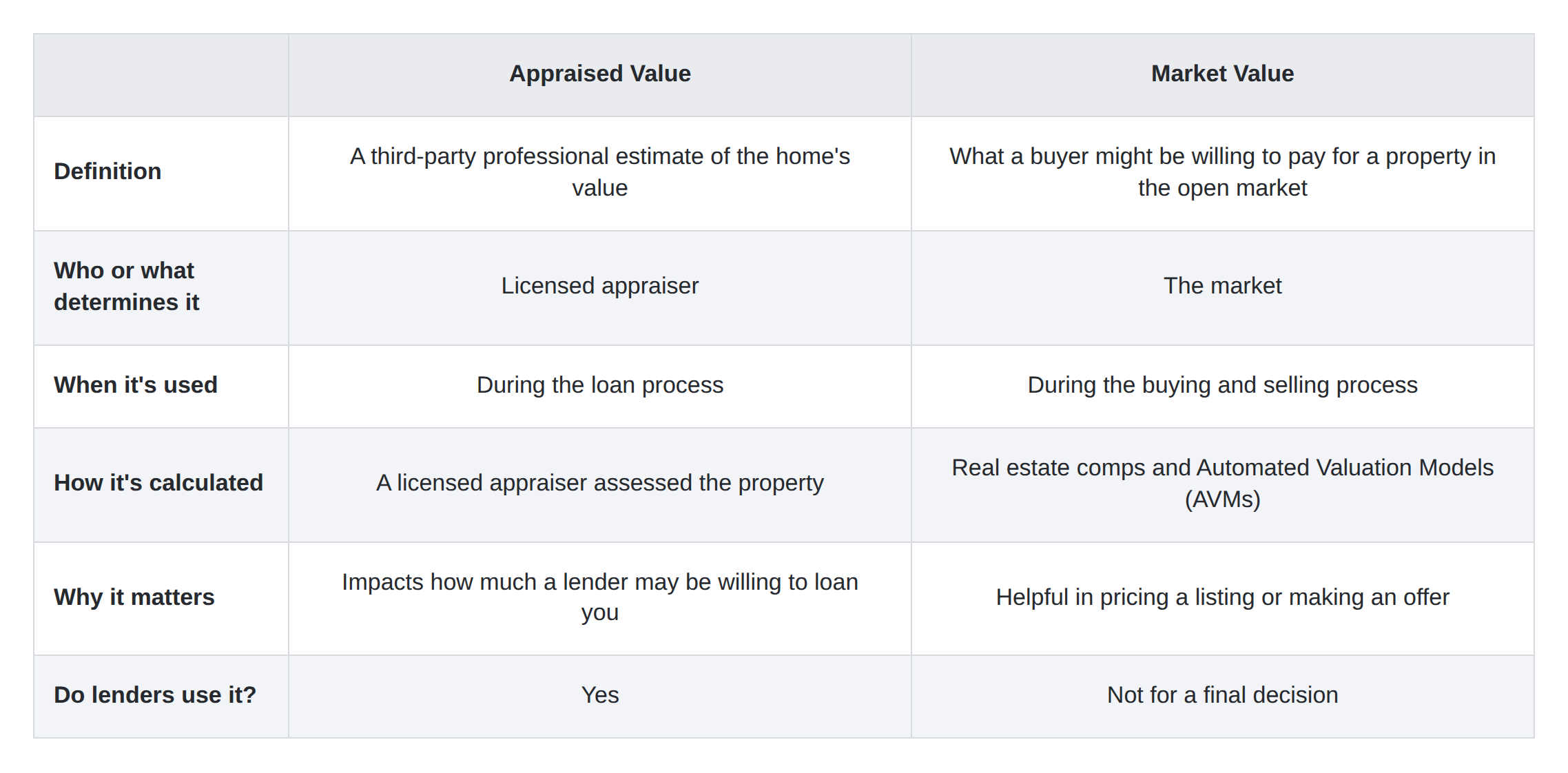
Source: https://www.freedommortgage.com/learn/mortgages/appraised-vs-market-value
What’s important to know is that if the appraisal value comes back lower than the market value, it could impact a buyer’s ability to get a mortgage and therefore make your home difficult to sell. A low appraisal might cause a seller to make up the difference between the appraised value and the sale price or lower the asking price.
Ways to Maximize Your Home Appraisal Value
Home appraisers follow a standardized process using the Uniform Appraisal Report (URAR/Form 1004). This isn’t a casual walkthrough. The appraiser fills out a detailed form that scores your property on specific criteria, from the condition of your roof to the age of your appliances. While you can’t change the age or square footage of your home, there are many ways to improve your home’s appraisal value.
Start by making your own assessment. Imagine that you are the appraiser and walk around your home’s exterior and interior with a careful eye. Take note of any obvious damage or maintenance issues. Lenders also suggest compiling a detailed list of all recent home improvements. Major upgrades should top the list: Have you replaced the roof? How old is the furnace and air conditioning unit? Have you remodeled the kitchen and/or bathrooms? Be sure to include the dates and costs of these upgrades. You can give this list to the appraiser, so they don’t miss hidden value additions.
According to experts, the key items that matter to appraisers are:
- Refaced or painted cabinets with updated hardware.
- New countertops – quartz and granite are the current standard in most markets.
- Updated appliances – stainless steel, Energy Star-rated.
- Adequate lighting and functional layout.
- Bathroom additions and/or remodels.
- The condition of the roof, foundation, siding, gutters, chimney and walls, looking for signs of leads, mold or other safety hazards.
However, even small cosmetic repairs and minor changes can make a difference. Experts recommend these simple fixes:
- Fix any leaky faucets, broken light switches or those annoying running toilets.
- Patch holes and dents in drywall and paint walls, if possible.
- Replace burned out lightbulbs.
- Replace worn faucets, doorknobs and cabinet hardware.
- Clean and declutter and clear pathways to all areas of the house, including the attic and the garage.
- Give your home a deep cleaning.
- Mow the lawn, trim overgrown bushes and remove any exterior debris. Remove weeds and dead vegetation.
- Apply a fresh coat of paint to the front door and touch up exterior trim.
- Clean any oil or grease stains off the driveway or garage floor.
The good news is that the same upgrades and maintenance issues that can improve your appraisal value will also help sell your home faster and often at a premium price! Potential buyers are looking for many of the same things as appraisers.
If you’re unsure about which upgrades or improvements to focus on, or need tips to maximize your home’s appraisal value, the team at Cornerstone Real Estate knows exactly what appraisers look for and can help you prioritize the upgrades that will make the biggest impact. Contact us today and let’s make sure you get every dollar your home deserves.